About the Journal
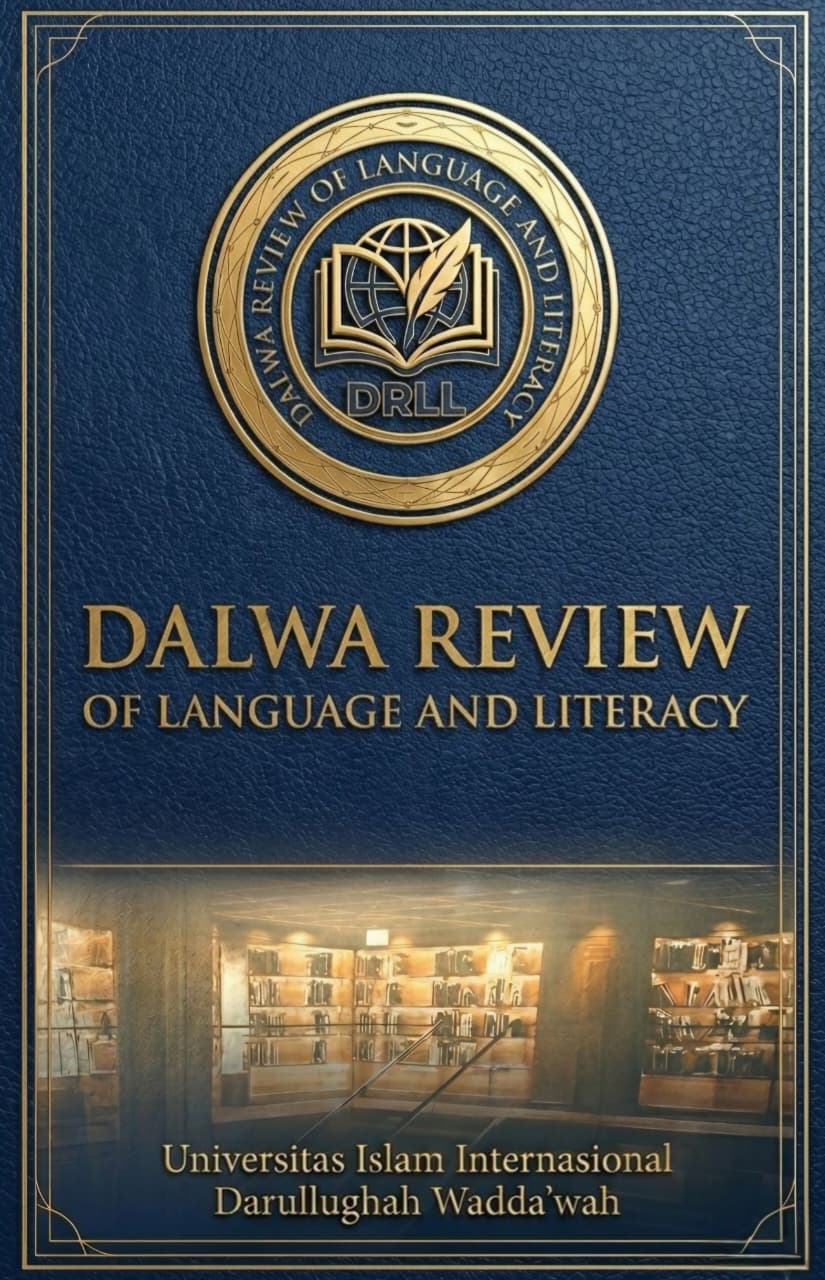
Dalwa Review of Language and Literacy (DRLL) (e-ISSN: 3163-6276) is an international scholarly journal that publishes research findings, theoretical analyses, and empirical studies in the field of contemporary education. The journal is committed to serving as a platform for the exchange of knowledge and innovation in the field of education on a global scale, reaching researchers, academics, practitioners, and policymakers worldwide. DRLL upholds the highest academic standards through a rigorous double-blind review process, ensuring that every published article makes a significant original contribution to the advancement of knowledge in the fields of language and literacy. As an open-access journal, DRLL ensures that research findings are freely and widely accessible without financial barriers, thereby promoting the democratic and inclusive dissemination of knowledge. The journal is published by the Language Center of Universitas Islam Internasional Darullughah Wadda'wah and is published bi-annually, with issues released every May and November.
Dalwa Review of Language and Linguistics (DRLL) is dedicated to publishing original research that provides significant theoretical and practical contributions to the fields of Arabic and English language studies. The journal’s scope encompasses in-depth analyses of core linguistics (phonology, morphology, syntax, semantics, and pragmatics), as well as interdisciplinary studies involving contrastive sociolinguistics and psycholinguistics within the context of language acquisition. Particular emphasis is placed on pedagogical innovations in Teaching Arabic as a Foreign/Second Language (TAFL/TASL) and English (ESL/EFL/ESP), the development of multilingual literacy, and the integration of cutting edge technologies such as Computer-Assisted Language Learning (CALL), Mobile-Assisted Language Learning (MALL), and the application of Artificial Intelligence (AI) in language education. Furthermore, DRLL explores the dynamics of cross-linguistic translation, rhetoric, language policy, and curriculum evaluation based on international standards. Adopting a multidisciplinary approach, the journal also welcomes articles examining the intersections of literature, cultural identity, and ecolinguistics to foster a broader global understanding of linguistic phenomena in the digital era.
Current Issue
Vol. 1 No. 1 (2026): May
Published:
2026-04-30
Articles
-
The Dynamic Interplay of Foreign Language Enjoyment and Boredom in Arabic Classrooms: A Mixed-Methods Study on Learner Engagement
 Abstract
Views:
151
Abstract
Views:
151
 PDF downloads:
180
PDF downloads:
180
-
Implementing Project-Based Learning to Enhance EFL Students’ Speaking Skills in Higher Education
Abstract
Views:
200
PDF downloads:
124
-
Arabic Language Education Students’ Perceptions of the Use of Artificial Intelligence (AI) in Arabic Language Learning
Abstract
Views:
213
PDF downloads:
108
-
Arabic Language in Political Discourse: A Sociolinguistic Analysis of the 2024 Malang Mayoral Candidate Debate
Abstract
Views:
92
PDF downloads:
67
-
Evaluating the Test of Arabic as a Foreign Language (TOAFL) Graduation Requirement Policy in Higher Education: Students Perspectives
Abstract
Views:
180
PDF downloads:
98
-
Neuro-Pragmatic Patterns in AI-Mediated Arabic–English Interaction: Rethinking Meaning Construction in Digital Dialogues
Abstract
Views:
78
PDF downloads:
82
-
The Epistemology of Language Origins and Its Implications for Classical and Modern Linguistic Studies An Analysis of Ibn Jinni’s Thought
Abstract
Views:
491
PDF downloads:
76


Other Indexed===>
Reference Management and Plagiarism Tools: